
In today’s fast-paced business world, companies are continually seeking innovative methods to train employees effectively. Traditional training approaches, such as lectures, manuals, and e-learning modules, often fail to engage learners fully or promote long-term retention. This has led many organizations to explore Virtual Reality (VR) training as a modern alternative. By immersing employees in realistic, interactive scenarios, VR training not only enhances engagement but also significantly improves learning outcomes and knowledge retention.
The Immersive Nature of VR Training
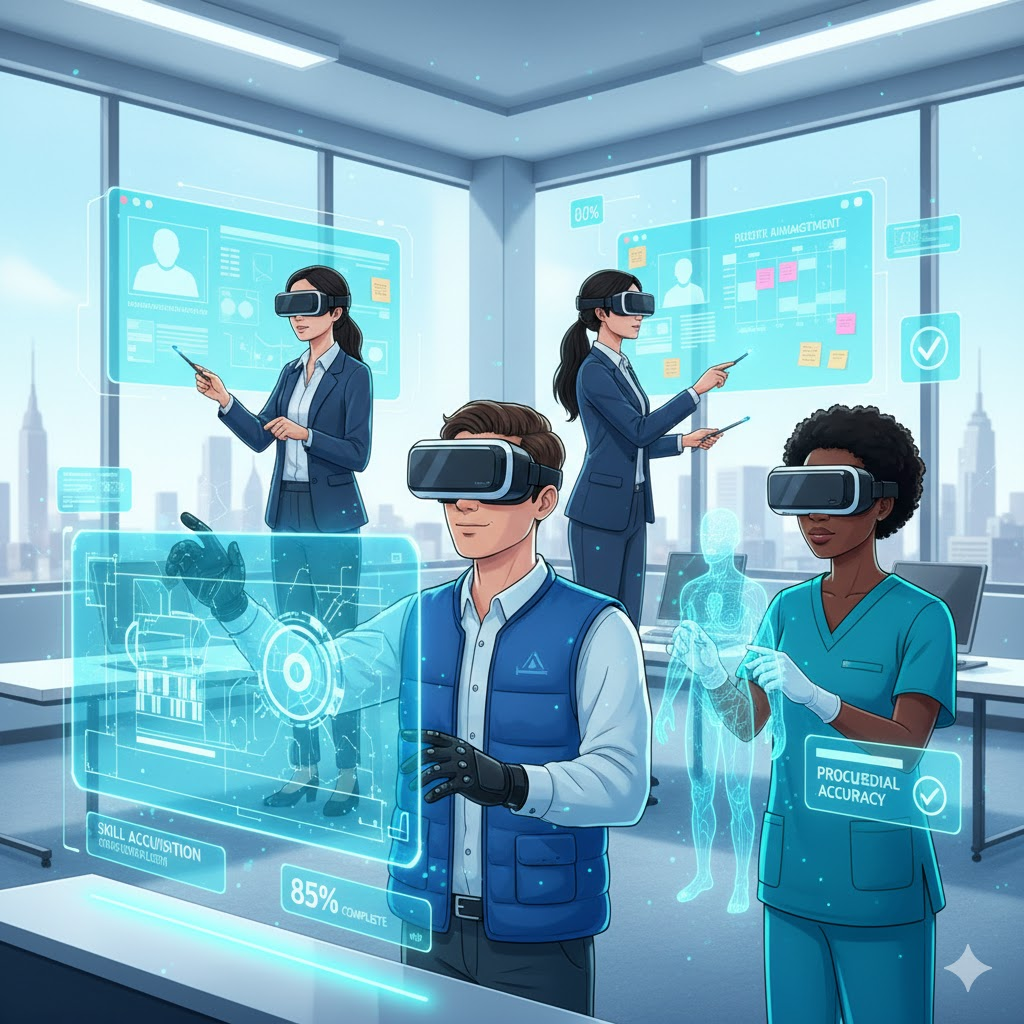
Understanding what is VR training is essential to grasp how it impacts learning. VR training creates a simulated environment where employees can interact with tasks, tools, and scenarios that mirror real-world situations. Participants use VR headsets to experience these virtual spaces as if they were physically present, allowing them to practice tasks, make decisions, and observe outcomes in real-time. This immersion activates multiple senses simultaneously, fostering a deeper cognitive connection to the material.
Unlike traditional learning methods, VR engages learners actively. Instead of passively reading or watching, employees perform actions, solve problems, and receive immediate feedback. This active participation strengthens memory formation and reinforces the neural pathways associated with skill acquisition, making the learned content more likely to be retained over time.
Enhancing Engagement Through Realistic Scenarios
One of the critical ways VR training improves learning and retention is by increasing engagement. In conventional settings, employees may struggle to focus during lengthy presentations or repetitive e-learning sessions. VR training, however, transforms learning into an interactive and compelling experience. Employees navigate lifelike scenarios that challenge their problem-solving abilities, decision-making skills, and critical thinking. This heightened engagement encourages focus and motivation, which are crucial for retaining information.
For example, a warehouse employee can practice operating heavy machinery in a VR simulation, experiencing the consequences of errors without real-world risk. Similarly, healthcare professionals can perform virtual procedures, refining their techniques and understanding of complex processes. By simulating realistic challenges, VR training helps employees internalize skills more effectively than traditional methods.
Immediate Feedback and Safe Learning Environment
VR training offers instant feedback, which is essential for learning and retention. In a virtual environment, employees can see the results of their actions immediately, allowing them to adjust techniques and correct mistakes in real-time. This immediate reinforcement solidifies understanding and helps prevent the repetition of errors.
Furthermore, VR provides a safe space for trial and error. Employees can practice high-risk tasks, such as operating hazardous equipment or performing emergency procedures, without fear of injury or costly mistakes. This safe learning environment promotes confidence and reduces anxiety, which are significant factors in knowledge retention and skill development.
Repetition and Consistency
Another advantage of VR training is the ability to repeat scenarios consistently. Traditional training often relies on limited resources, instructors, or time, making it difficult for employees to practice skills multiple times. VR allows for unlimited practice in identical scenarios, ensuring that employees can refine their abilities until mastery is achieved. Repetition strengthens memory retention and increases the likelihood that skills will be effectively applied on the job.
Organizations can also customize VR modules to match their specific workflows, equipment, and safety protocols. This tailored approach ensures that employees are learning relevant skills that directly translate to their daily tasks, further enhancing the retention of practical knowledge.
Measuring Learning Outcomes
One of the key benefits of VR training is its ability to track and measure employee performance. Many VR systems provide analytics on decision-making, task completion times, accuracy, and other metrics. This data allows trainers and managers to identify knowledge gaps, assess skill development, and provide targeted support where needed. By quantifying learning outcomes, companies can ensure that employees not only complete training but also retain the knowledge and skills necessary to perform effectively in real-world situations.
Applications Across Industries
VR training is versatile and applicable across multiple sectors. In healthcare, it helps professionals practice surgeries and emergency responses. In manufacturing, it trains employees on machinery operation and hazard recognition. Retail staff can enhance customer service skills in simulated store environments, while corporate teams can develop leadership and collaboration skills through immersive scenarios. Across all industries, VR training enhances both learning and retention by providing relevant, hands-on experience that is difficult to replicate through traditional methods.
Conclusion
Understanding what VR training is and how it functions highlights its transformative impact on employee learning and retention. By immersing employees in realistic, interactive environments, providing immediate feedback, and allowing repeated practice, VR training creates a highly engaging learning experience that reinforces knowledge and skills. Organizations that adopt VR training benefit from a workforce that retains information more effectively, performs tasks with greater confidence, and is better prepared to meet workplace challenges. As industries continue to evolve, VR training is poised to become a cornerstone of modern workforce development, ensuring that employees are both skilled and adaptable in an ever-changing professional landscape.
